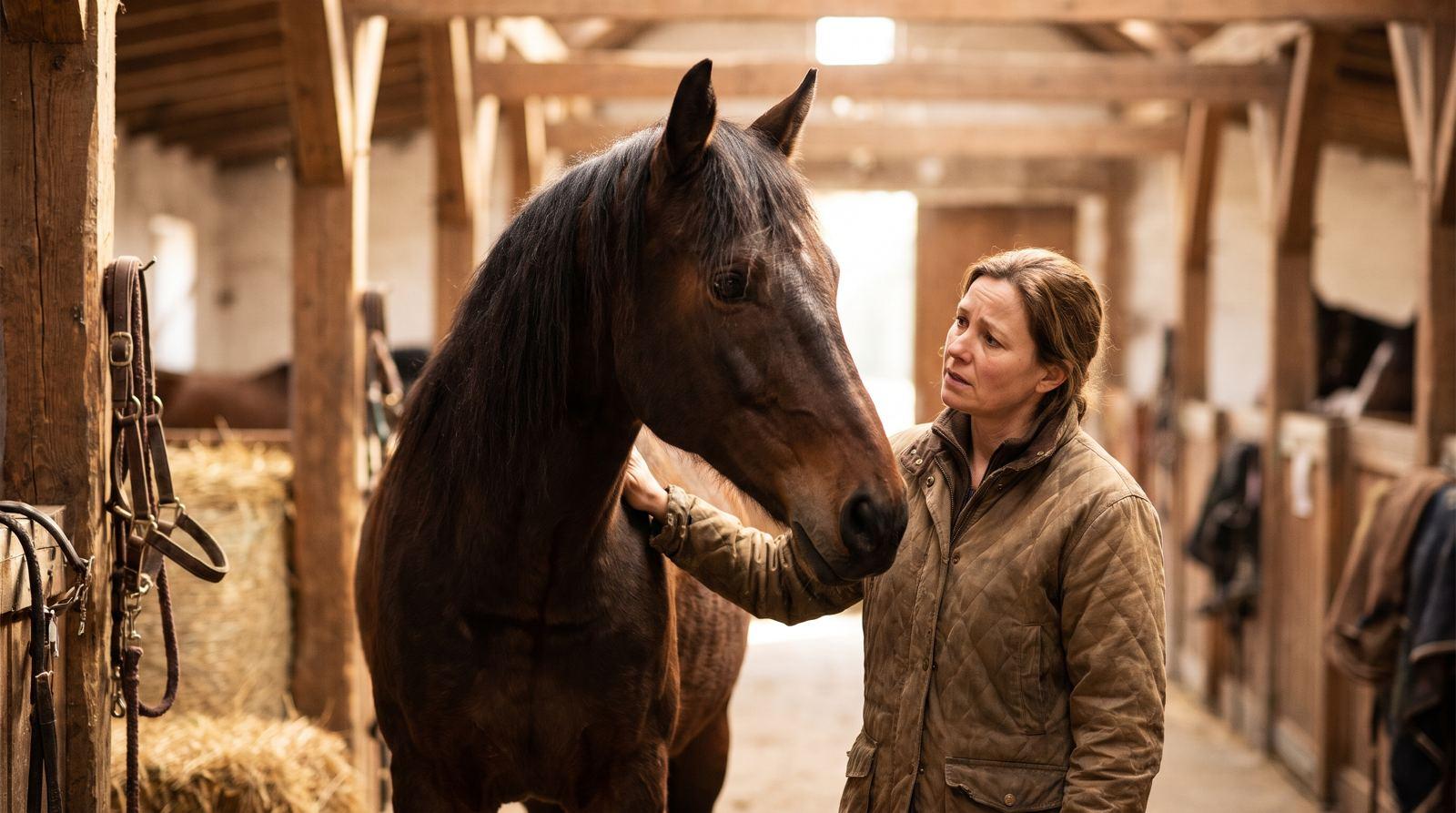
Imagine arriving at the stable for your morning ride. Your horse, who normally greets you at the door, is standing quietly in the corner. The hay is untouched. It keeps glancing back at its own stomach and pawing at the ground.
You might put it down to an off day. But these could be the first signs of colic — and it's one of the few situations where knowing what to look for, and acting quickly, genuinely saves lives.
You don't need a veterinary degree to spot the warning signs. You just need to know what's normal for your horse, what isn't, and what to do in the minutes before the vet arrives. That's what this guide covers.
1. What Exactly Is Colic?
"Colic" isn't one specific illness — it's just the word vets use for abdominal (tummy) pain in horses, usually coming from somewhere in the digestive system.
The cause can be something fairly minor, like trapped gas or a bout of gut cramping, or something much more serious, like a blockage or a twisted section of bowel. Some horses recover with medication and fluids from the vet; a smaller number need emergency surgery.
The golden rule: if you suspect colic, call your vet immediately. Don't wait to see if it passes on its own — even mild-looking colic can change quickly.
2. Why Are Horses So Prone to It?
Horses are grazing animals, built to nibble small amounts of fibrous food more or less constantly through the day — not to eat two or three big meals. A few quirks of their anatomy make them unusually easy to upset:
- A small stomach: an adult horse's stomach holds roughly 8–15 litres, built for frequent small meals rather than large feeds of grain.
- Constant acid production: the stomach keeps producing acid whether or not the horse is eating.
- A sensitive hindgut: most fibre digestion happens further down, in the large intestine, where huge numbers of gut bacteria break down forage. Change the diet too suddenly and you can throw that balance off.
- A long, winding gut: the large intestine loops and narrows in several places, which gives feed material places to get stuck, and gives the gut itself room to shift out of position.
On top of that, horses can't vomit. If gas or fluid builds up with nowhere to go, pressure inside the gut can rise to dangerous levels. That's a big part of why digestive health matters so much in day-to-day horse care.
3. What Causes Colic?
Knowing the common causes helps you spot risk factors in your own horse's routine.
Gas and gut spasms. Trapped gas or abnormal gut contractions cause cramping. The horse may keep looking at its flank, paw the ground, or lie down and get up repeatedly. Most of these uncomplicated cases respond well to a vet visit.
Impaction (a blockage). Partly digested feed builds up and forms a blockage, usually in the intestine. Common triggers include dehydration, not drinking enough, poor teeth, too little exercise, or unsuitable forage.
Sand colic. Horses grazing on sandy ground, or eating hay off the soil, can swallow sand without meaning to. Over time it can build up inside the gut and irritate it.
Twisted or displaced gut. This is the most dangerous type. A section of intestine moves out of place or twists on itself, which can cut off its own blood supply. These cases often need emergency surgery.
Inflammation and other causes. Inflammation of the gut, parasites, and certain tumours can also trigger colic.
The important thing to remember: you can't tell which type of colic your horse has just by looking at the symptoms. That's the vet's job — your job is to notice something's wrong and get help.
4. Is Your Horse Showing Signs of Colic?
This is the part every owner should know cold. Horses can't tell you their stomach hurts — they show it through changes in behaviour. And because you see your horse every day, you're usually the first person who'll notice something's off.
Early warning signs:
- Pawing — scraping a foreleg repeatedly against the ground.
- Watching its flank — turning its head back towards its own stomach.
- Going off feed — ignoring hay or showing little interest in food.
- Restlessness — shifting position constantly, unable to settle.
- Odd stretching — standing with the front legs stretched out, or an unusual posture.
- Less manure than usual.
- Lying down a lot more than normal.
Signs of a possible emergency — call the vet right away:
- Repeated rolling, or violent attempts to lie down.
- Kicking or biting at its own belly.
- Sweating heavily with no exercise to explain it.
- Severe restlessness, unable to settle at all.
- A visibly swollen belly.
- Fast breathing or a very high heart rate.
- Pale, dark red, or otherwise unusual-coloured gums.
For context, a normal resting heart rate for most adult horses sits around 28–44 beats per minute. A rate that's stayed above 60, especially alongside signs of pain, is a red flag.
One important trap: some horses with serious colic go quiet and withdrawn instead of thrashing around in obvious pain. A horse suddenly going very still isn't necessarily a horse that's getting better — check in with the vet either way.
5. What Should You Do If Your Horse Has Colic?
If you suspect colic, don't wait and see — act straight away.
- Call your vet. Describe the symptoms, when they started, and whether your horse has had colic before.
- Take away all feed. Hay, grass, and hard feed — all of it, until the vet tells you otherwise. Ask the vet specifically about water, rather than assuming it should be withheld too.
- Check vital signs if it's safe to do so. Temperature, heart rate, breathing rate and gum colour all help the vet assess the situation over the phone.
- Keep the horse (and yourself) safe. Clear away anything it could injure itself on. If it keeps trying to roll, move it to a safer area only if you can do that without putting yourself at risk.
- Walk it only if it helps. A little gentle walking can stop a restless horse from hurting itself while rolling — but walking is not a treatment for colic. If the horse is lying quietly and comfortably, let it rest.
Don't medicate without the vet's say-so. Never give Bute, Banamine or any other painkiller before speaking to your vet — it can mask the symptoms they need to see, and getting the dose or method wrong can cause serious harm. Never try to give mineral oil or water via a stomach tube yourself; that's a job for a vet.
6. How Can You Help Prevent Colic?
You can't prevent every case, but good everyday stable management meaningfully lowers the risk.
| Habit | Why it matters |
|---|---|
| Put forage first | Good hay or grass should be the backbone of the diet — avoid long gaps with nothing to eat, and keep grain/concentrate feeds small and split up. |
| Change the diet slowly | Introduce new hay, feed or grazing over 10–14 days (or longer), so the gut's bacteria can adjust. |
| Keep water always available | Check troughs haven't frozen in winter, and watch intake closely in hot weather or after exercise. |
| Stay on top of dental care | Poor teeth mean poor chewing, which raises colic risk — aim for a dental check every 6–12 months. |
| Deworm sensibly | Work with your vet on a targeted programme using faecal egg counts, not routine over-worming. |
| Keep up daily turnout and exercise | Regular movement supports normal gut function. |
| Avoid feeding on sandy ground | Use a raised feeder or feeding mat rather than hay straight on sandy soil. |
| Keep a consistent routine | Sudden changes to feeding times, exercise or turnout can unsettle the gut. |
7. Your Five-Minute Daily Health Check
You don't need to be a vet to notice when something's wrong — you just need a quick daily routine. Before or after your ride, take a minute to check:
- Appetite — eating normally?
- Water — drinking enough?
- Manure — a normal amount, nothing unusual?
- Behaviour — alert, acting like itself?
- Movement — moving comfortably?
Get to know your own horse's normal resting heart rate and general demeanour. If anything feels off, mention it to your stable manager — and call the vet if you suspect colic.
Final Thoughts: Know Your Horse, Protect Your Horse
Colic is one of those areas where a little knowledge really does make a big difference. You don't need to understand every detail of equine digestion or be able to name what's causing the pain — you just need to notice when something's wrong, and act on it quickly.
As the owner, you're your horse's first line of defence. Pay attention to its everyday behaviour, keep feeding and exercise consistent, make sure it always has water, and never brush off signs of abdominal discomfort.
With colic, acting early is what saves lives.
This article is for general information only and doesn't replace professional veterinary advice, diagnosis or treatment. If you suspect colic, contact a qualified equine vet immediately.